

Patch 9.2, Eternity’s End, served as the formal narrative conclusion to the Shadowlands expansion, initiating the profound reveal of the deepest cosmological structures within the Warcraft universe. The introduction of Zereth Mortis and the architects known as the **First Ones** fundamentally altered the established power hierarchy. To fully grasp the implications of this new lore, it is necessary to perform a rigorous analysis of the nature of this primordial forge and, critically, the existential, destructive ambition of Zovaal, The Jailer.
This deep dive interprets the fragmented archival data to establish Zovaal’s campaign as an act of calculated, systemic revolution aimed at seizing the core control mechanism of reality itself.

Zereth Mortis: The Proto-Engine of Existence
Zereth Mortis is definitively established not as a mere afterlife zone, but as the actual primary workshop—the ‘cosmic production facility’—where the First Ones constructed the operational reality of the afterlife system (the Shadowlands). The entire zone is governed by complex mathematical and linguistic parameters, operating via Progenitor Language Scripts and precise tonal coding (the “Song of Creation”). This mechanism confirms that existence, particularly the processing of souls, is fundamentally a programmed system. Every external plane, including the various Covenant realms (Bastion, Maldraxxus, etc.), was prototyped and engineered within this core facility.
The Enigma of the First Ones and the Systemic Flaw
The First Ones themselves remain largely enigmatic, communicating only through fragmented archival relics, cryptic puzzles, and ancient command protocols left within the Sepulcher. Their most significant, albeit unintentional, legacy, is the structural flaw they left in the system: the ability for a force like Zovaal to eventually exploit and breach the mechanism. The machinery of the Shadowlands, designed to process souls impartially, was intended to be unbreakable. Zovaal, originally one of the Eternal Ones, discovered a critical means to subvert or exploit this system’s initial design, leading to his banishment and his centuries-long operation known as Temporal Conspiracy Protocol (TCP).
Zovaal’s Existential Ambition: Reality Re-synthesis
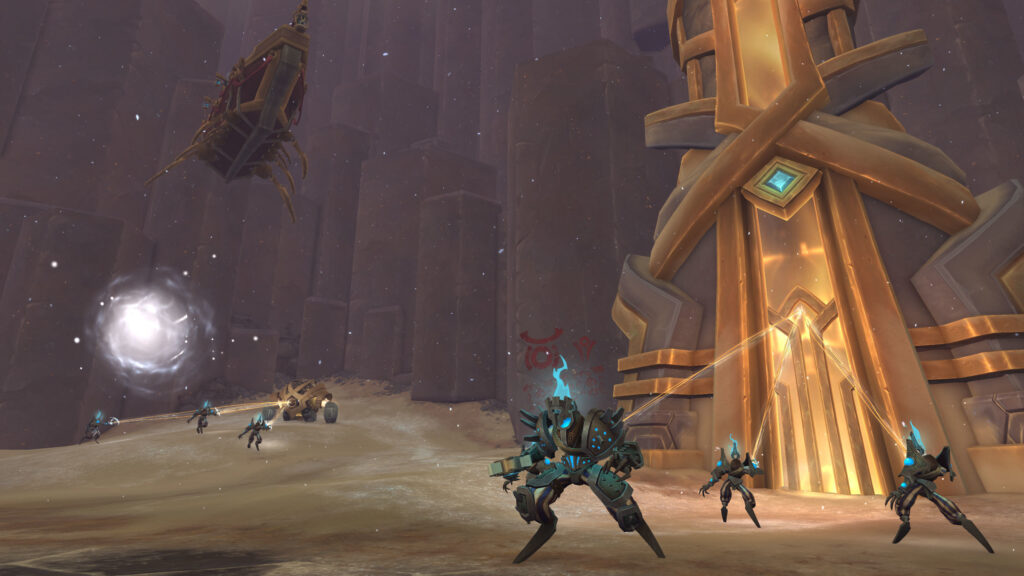
Zovaal‘s final motivation transcends simple conquest or revenge. His goal was the seizure of the Sepulcher of the First Ones—the core control mechanism—to initiate a process of **Reality Re-synthesis (RRS)**. He believed the reality constructed by the First Ones was inherently flawed, vulnerable to existential threats (implied to be the true forces of the Void or Disorder). Utilizing the immense Anima accumulated via the Maw, he sought to use the Sepulcher’s terminal to tear down the entire cosmic structure and rebuild it under his absolute Dominance and Control Protocol (DCP). This establishes him as a revolutionary antagonist seeking total cosmic stability through tyrannical restructuring.
The Hierarchy of Cosmic Power Redefined
Patch 9.2 fundamentally shifted the accepted cosmic hierarchy. The following entities were revealed to be subordinate to the First Ones:
- The Titans: Revealed to be constructs or agents of a lesser order, not primal creators.
- The Eternal Ones: Revealed to be simply constructs of the First Ones, installed as processors for the afterlife system.
- The Arbiter: Confirmed as an advanced, impartial machine designed to manage soul allocation, also a First Ones construct.
- The Six Forces (Life, Death, Order, Disorder, Light, Void): Implied to be balanced components within a larger framework engineered by the Progenitors.
Anima as the RRS Catalyst
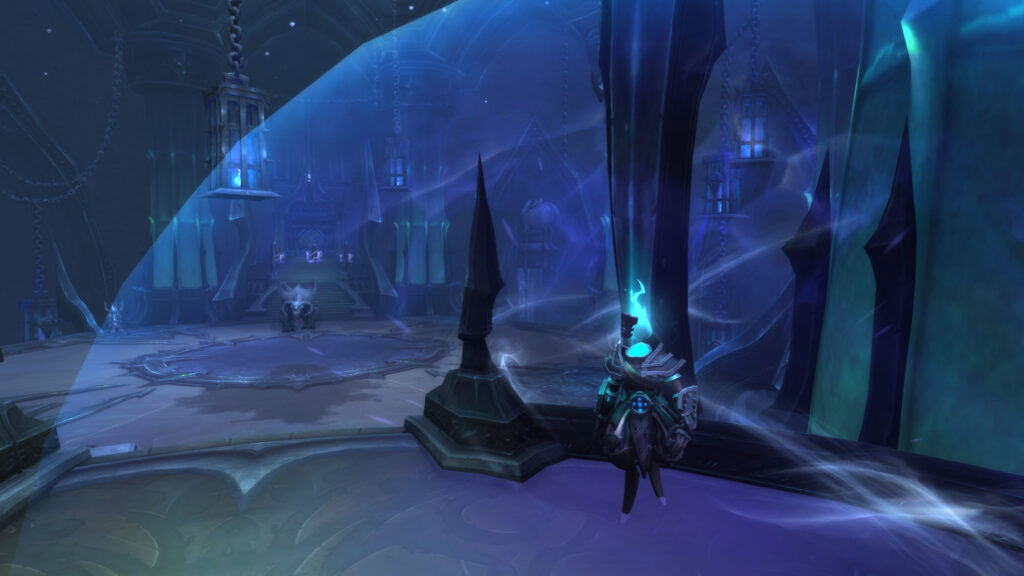
The persistent resource scarcity narrative throughout Shadowlands is contextually validated by the revelation of Anima’s true purpose. Anima is not merely fuel for local machines; it is the primordial energy source required to power the RRS mechanism within the Sepulcher. Zovaal’s entire campaign of famine and soul harvesting was a strategic long-term acquisition phase, necessary to provide the energetic catalyst for his final reality-warping objective. This strategic resource denial (SRD) was essential for achieving the necessary power density to operate Progenitor technology.
Conclusion: Legacy of the Progenitors and Future Conflicts
While Zovaal’s defeat restored the Arbiter and the cosmic order’s functionality, the knowledge that the universe is a constructed system, capable of being dismantled and rebuilt, introduces radical uncertainty. The focus of future conflicts may shift from fighting elemental threats to addressing the consequences of the First Ones’ flawed engineering and the potential emergence of other entities seeking RRS capability via the now-exposed structure of existence. The cosmological framework is permanently destabilized.